
What to Expect After Getting a Dental Crown
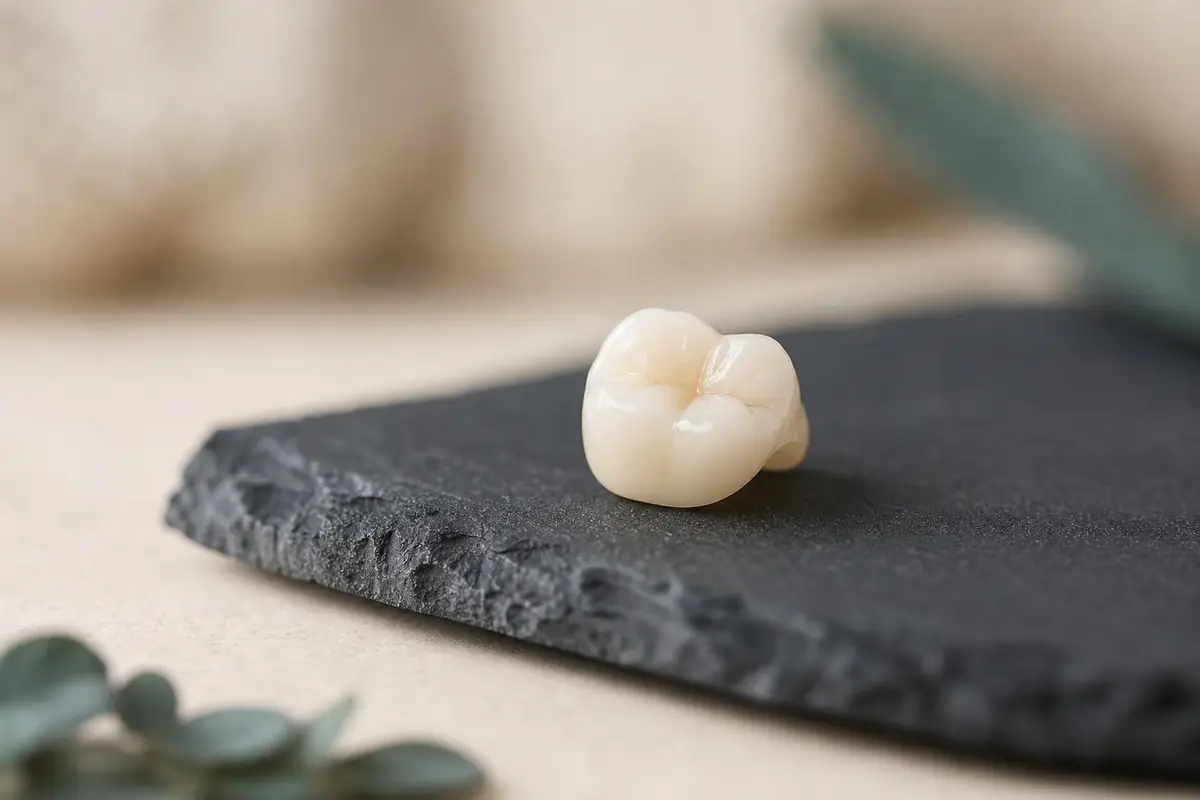
After a crown is placed, it is normal to have mild sensitivity to cold and some gum tenderness for a few days. If you are wearing a temporary crown, avoid sticky and hard foods until the permanent one goes on. Call your dentist if your bite feels high, pain gets worse instead of better, or the crown feels loose. Crowns are part of the restorative care we provide, and most patients are back to normal eating within days.
Key points
- Mild cold sensitivity and sore gums for a few days are normal.
- A bite that feels high is common and is easily adjusted. Don't just put up with it.
- With a temporary crown, avoid sticky foods and slide floss out sideways.
- The tooth under a crown can still decay at the edge, so keep cleaning there.
If you have a temporary crown
When a crown is made in a dental lab, you usually wear a temporary crown for a short time. Temporaries are held with a softer cement so they can be removed easily, which also means they come off more easily.
- Avoid sticky or chewy foods such as caramel, gum, and taffy, and hard foods such as nuts and ice.
- Chew mostly on the other side.
- When flossing, slide the floss out to the side rather than lifting it up, which can pull the temporary off.
- If it comes off, keep it and call the office. Don't leave the tooth uncovered for days.
The first few days with your permanent crown
The numbness wears off within a few hours. Expect some sensitivity to cold and some tenderness in the gum around the tooth, which usually settle within days. Brush and floss normally, gently at first.
Signs your crown needs attention
- Your bite feels high. If that tooth touches first when you close, the crown needs a small adjustment. This is quick, and leaving it can make the tooth sore.
- Sharp pain when biting, or pain that is getting worse after the first few days.
- Sensitivity that lingers for weeks, or a throbbing ache.
- A loose crown, or a gap you can feel at the gumline.
- Swelling or a bump on the gum near the tooth.
How do I make a crown last?
A crown cannot decay, but the tooth underneath can, especially at the margin where the crown meets the tooth. That is why cleaning there matters.
- Brush twice a day and clean between your teeth daily, paying attention to the gumline.
- Don't chew ice, pens, or fingernails, or use your teeth to open packaging.
- If you grind your teeth, ask about a night guard. Grinding is a common reason crowns crack.
- Keep regular check-ups, so a problem at the margin is caught while it is small.
Grinding is one of the biggest threats to crowns. Our guide to teeth grinding covers the signs. Crowns are also the visible part of dental implants, if you are replacing a missing tooth.
References
This article is general dental health information, not personal medical advice. For recommendations specific to your teeth, schedule an exam.