
Teeth Grinding (Bruxism): Signs, Causes, and What Helps
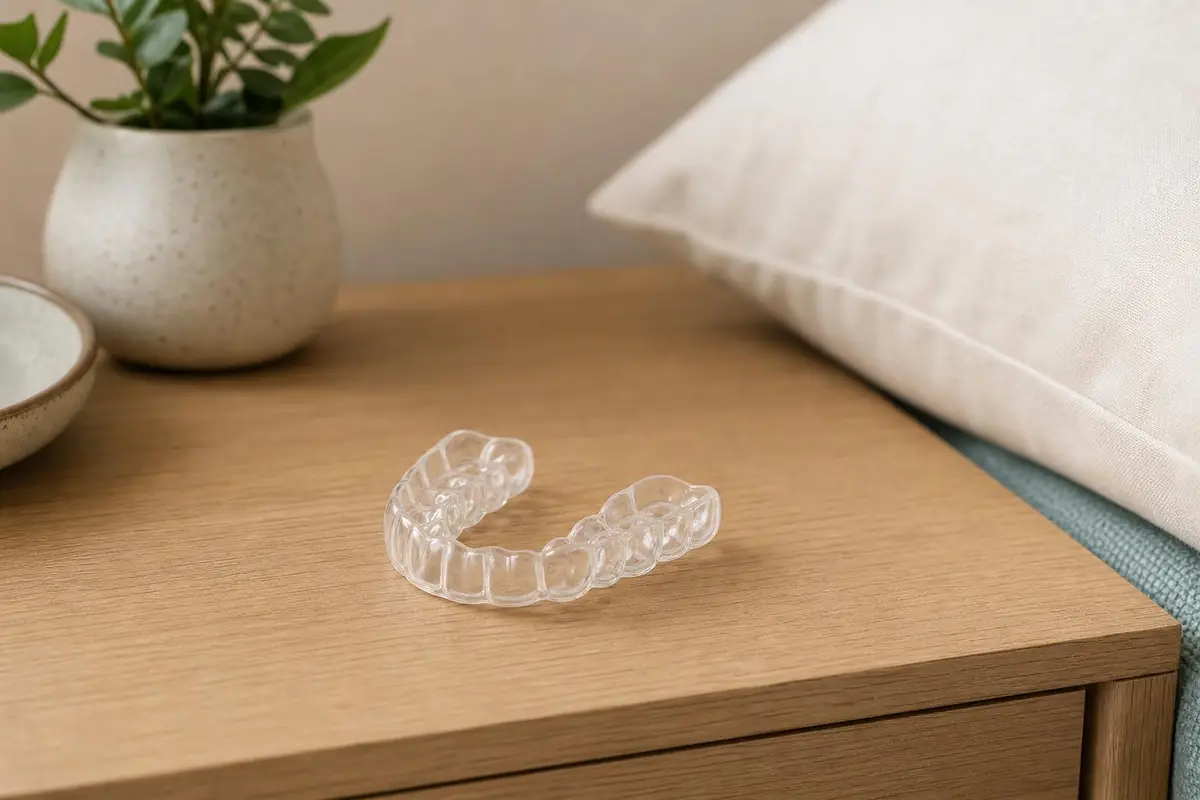
Bruxism is grinding or clenching your teeth, most often during sleep. The usual signs are a sore or tired jaw in the morning, headaches near the temples, worn, flattened, or chipped teeth, and new sensitivity. Because it happens unconsciously, a dentist often spots the wear at a routine exam before you notice anything. The main approaches are protecting the teeth, usually with a custom night guard, and addressing what drives the habit.
Key points
- Most grinding happens during sleep, so many people don't know they do it.
- A partner hearing grinding at night is one of the most reliable clues.
- Grinding wears teeth down and can crack teeth, fillings, crowns, and veneers.
- A custom-fitted night guard protects teeth. It doesn't stop the grinding itself.
- Snoring or gasping in your sleep alongside grinding is worth mentioning to your doctor.
What are the signs of teeth grinding?
- Waking with jaw soreness, tightness, or a dull headache
- Teeth that look shorter, flatter, or chipped at the edges
- Sensitivity to cold that seems to have no other cause
- Tooth or jaw pain when chewing
- A partner hearing grinding or clicking at night
- Ridges on the inside of your cheeks, or scalloped edges on your tongue
What causes bruxism?
There is often no single cause. Common contributors include stress and anxiety, sleep problems (grinding is associated with sleep apnea), caffeine, alcohol and tobacco, especially in the evening, and some medications. Clenching during the day is often a stress habit people slip into while concentrating.
Why does it matter?
Teeth are built for brief chewing forces, not hours of grinding. Over time, bruxism can wear through enamel, crack teeth, loosen or break fillings and crowns, and shorten the life of cosmetic work. It is the most common reason veneers fail early, and it puts extra stress on dental implants.
Our article on how long porcelain veneers last explains why treating grinding is the single best way to protect cosmetic work.
What helps with teeth grinding?
- A custom night guard. A thin guard made from impressions of your teeth takes the wear instead of your enamel. Store-bought guards are cheaper but bulkier and fit less precisely, so they are harder to sleep in.
- Cutting back on evening triggers. Less caffeine and alcohol later in the day can reduce night-time grinding for some people.
- Daytime awareness. Lips together, teeth apart, jaw relaxed is the resting position to aim for. Noticing daytime clenching is the first step to stopping it.
- Looking at sleep. If you snore loudly, stop breathing in your sleep, or wake unrefreshed, mention it to your physician. Treating a sleep problem can reduce grinding.
Is it TMD?
Jaw clicking, locking, or pain in the joint in front of your ear can point to a temporomandibular disorder (TMD), which overlaps with grinding but is not the same thing. Most cases improve with conservative care. Persistent jaw pain is worth having examined.
If you have noticed any of these signs, mention them at your next exam. Wear is far easier to protect against early than to repair later. You can request an appointment online or call (714) 848-8211.
References
This article is general dental health information, not personal medical advice. For recommendations specific to your teeth, schedule an exam.