
Can You Get Just One Veneer? Matching a Single Tooth
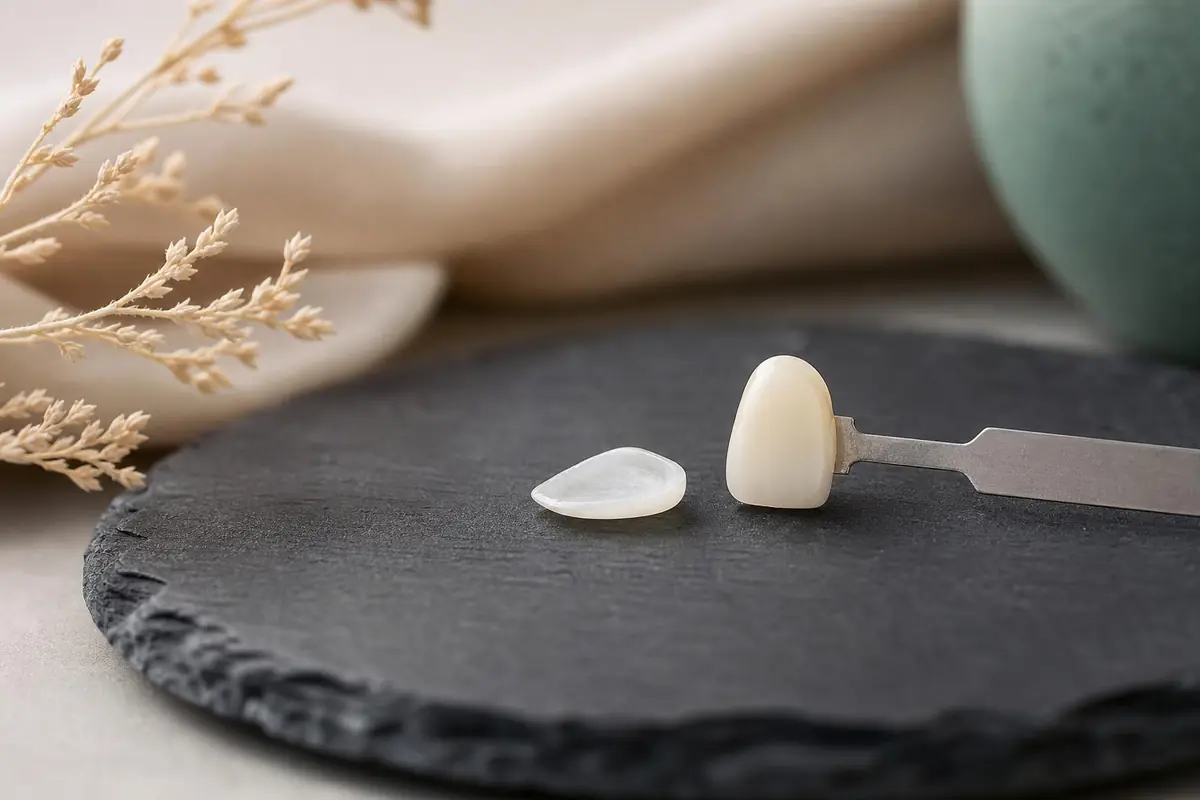
Yes. A single veneer can fix one chipped, discolored, or misshapen front tooth, and some patients only ever need one. The challenge is matching: one porcelain tooth has to blend with the natural teeth on either side in shade, translucency, and shape, which takes careful planning and sometimes extra try-in steps. At Pacifica Dental in Huntington Beach, a complimentary cosmetic consultation tells you whether a single porcelain veneer, bonding, or another option suits that tooth.
Key points
- One veneer is a common and reasonable request for one problem tooth.
- Matching a single veneer to natural neighbors is harder than matching a full set.
- Veneer color is fixed once it's made, so whiten first if you want lighter teeth.
- Bonding, a crown, whitening, or Invisalign can be better answers depending on the problem.
- Traditional veneers usually involve removing a thin layer of enamel, which can't be undone.
When does a single veneer make sense?
- One front tooth is chipped, worn, or uneven compared with the others
- One tooth is darker than its neighbors and whitening hasn't helped
- One tooth is smaller or a different shape from the tooth on the other side
- An old bonding repair on one tooth keeps staining or chipping
In each case the goal is the same: a tooth nobody notices. That's a different design problem from a smile makeover, where several teeth are planned together.
Why is matching one tooth harder than matching several?
With six or eight veneers, the teeth are designed as a set, so they naturally match each other. With one veneer, the target is your own natural teeth, which can't be changed to meet it halfway. Natural enamel isn't one flat color. It is more translucent at the biting edge, a little warmer near the gum, and it reflects light in a particular way.
ADA MouthHealthy notes that choosing a shade to match your natural teeth is part of the veneer process. Porcelain is used because it handles light much like enamel does, but a single veneer still has to reproduce your neighbors' translucency and surface texture, not just their basic shade. If the tooth underneath is dark, that has to be accounted for too, or it can show through.
Should I whiten before getting one veneer?
If you want your teeth lighter, yes, and before the veneer is made. ADA MouthHealthy is clear that whitening doesn't work on veneers, so once the veneer is matched to your current shade, whitening the other teeth later would leave it looking darker. Whiten first, give the shade time to settle, and then match the veneer. We explain this in more detail in can you whiten veneers, crowns, or bonding.
What are the alternatives to a single veneer?
- Cosmetic bonding: tooth-colored resin shaped directly onto the tooth, often in one visit, suited to smaller chips.
- Whitening: if color is the only concern and the tooth responds to whitening.
- A crown: if the tooth has a large filling or structural damage, a crown may protect it better than a veneer.
- Lumineers: a minimal-prep veneer, if the tooth's position and shade suit a thinner veneer.
- Invisalign: if the tooth looks wrong because of its position rather than its surface.
Our guide to veneers vs. bonding compares the two most common choices for a single tooth.
What does the process look like?
- Design consultation: we look at the tooth, its neighbors, your bite, and your smile, and plan shape and shade together.
- Preparation: for a traditional porcelain veneer, a thin layer of enamel is removed from the front of the tooth. An impression or scan is sent to the lab, and a temporary may be placed.
- Placement: the veneer is tried in, adjusted if needed, and then bonded. The bite is checked so it feels natural.
ADA MouthHealthy notes that because enamel is removed, traditional veneer treatment can't be undone. Cleveland Clinic describes the usual sequence as two visits. For a single tooth where the match is especially demanding, an extra try-in step can be worth the time.
How do you care for a single veneer?
- Brush twice a day with a nonabrasive fluoride toothpaste and clean between your teeth daily. The tooth underneath can still decay.
- Don't bite nails, pens, or ice, and don't use your front teeth as tools.
- Wear a night guard if we recommend one for grinding or clenching.
- Keep regular cleanings so the edges stay clean and we can check the bond.
Common questions
Will one veneer look obviously different?
It shouldn't, and that's what the planning is for. Shade, translucency, shape, and surface texture all have to match the neighboring teeth.
How long does a veneer last?
It depends on your bite, habits like grinding, and home care. Our article on how long porcelain veneers last covers what shortens and extends a veneer's life.
What does a single veneer cost?
Cost depends on the material, the tooth, and any preparation needed. Our guide to what determines the cost of veneers explains the factors. Cosmetic veneers usually aren't covered by insurance, and financing is available.
Is the consultation free?
Yes. Cosmetic consultations at Pacifica Dental are complimentary, and they include veneers and Lumineers.
If one tooth is the thing you notice in every photo, a consultation will tell you which option gives the most natural result. Call Pacifica Dental at (714) 848-8211 or book a cosmetic consultation at our Huntington Beach office, led by Dr. Sameer Aljanedi.
References
This article is general dental health information, not personal medical advice. For recommendations specific to your teeth, schedule an exam.
Ongoing offer
Complimentary cosmetic consultation
Tell us what you'd change about your smile. We examine your teeth and lay out realistic options, starting with the most conservative.
- A conversation about what bothers you
- Realistic options at different budgets
- Exact numbers before you decide, with financing explained
Consultation only — treatment is quoted separately, with costs explained before anything begins.
Ongoing — no expiration.