
Can You Whiten Veneers, Crowns, or Bonding?
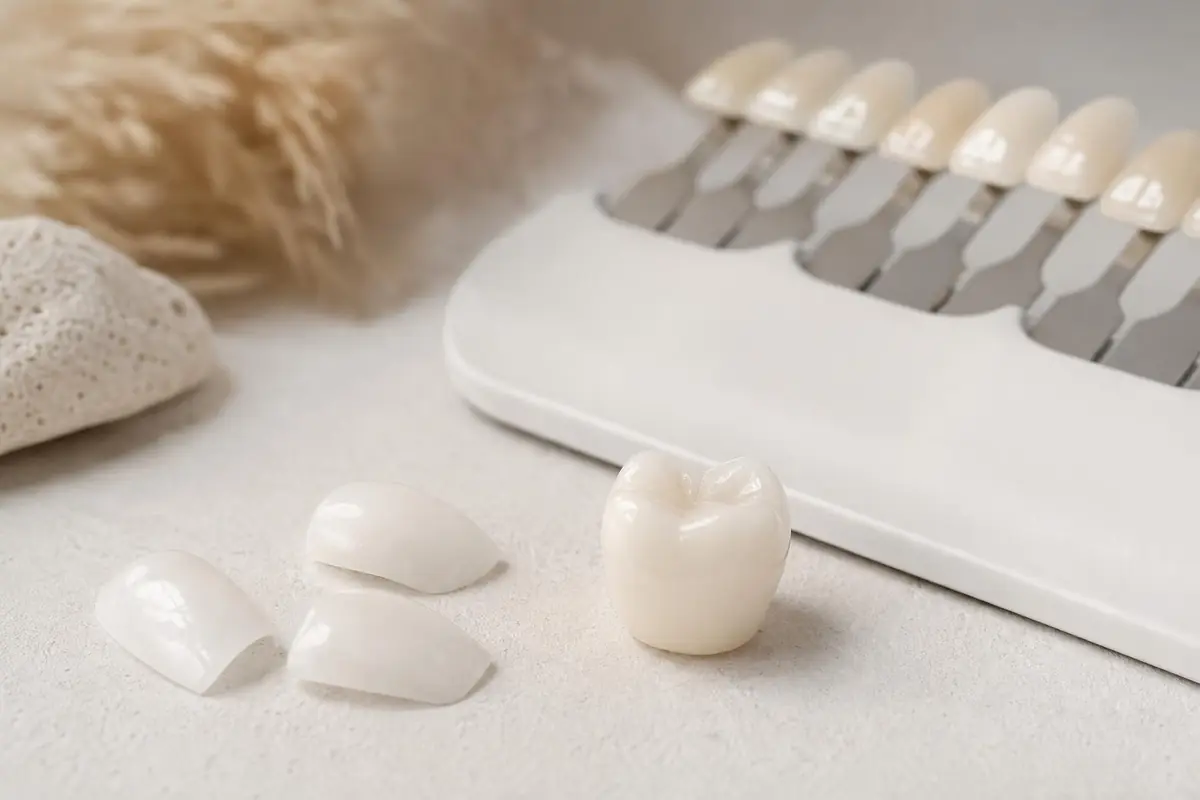
No. Whitening lightens natural tooth enamel, but it does not change the color of porcelain veneers, crowns, bonding, or tooth-colored fillings. If you whiten the natural teeth next to existing dental work, those teeth get lighter while the restorations stay the same shade, which can leave a visible mismatch. At Pacifica Dental in Huntington Beach, we plan teeth whitening around any existing restorations so the finished smile matches.
Key points
- ADA MouthHealthy is direct about it: whitening will not work on caps, veneers, crowns, or fillings.
- Restorations keep the color they were made in, so whitening nearby teeth can create a mismatch.
- Porcelain resists staining but can still pick up surface stain, and Cleveland Clinic advises avoiding whitening products on veneers because they can scratch them.
- If you want whiter teeth and new dental work, whiten first and match the new work to the result.
- Mismatched front teeth can be fixed by matching the natural teeth to the restoration, or by replacing the restoration.
Why doesn't whitening work on dental work?
Whitening gels use peroxide to break down the stain molecules inside enamel and the dentin beneath it. Porcelain and composite resin don't absorb stain or respond to peroxide the same way, and their color is set when they are made. The ADA's guidance for dentists notes that only natural teeth are whitened and that tooth-colored restorations, including crowns, don't change color, so they can end up mismatched with the whitened teeth around them.
What happens if I whiten teeth next to a crown or veneer?
The natural teeth lighten and the restoration doesn't. On a back tooth, few people would notice. On a front tooth, a crown or veneer that matched perfectly before can suddenly look darker than its neighbors.
A useful test before whitening is to smile in a mirror and note which crowns, veneers, or fillings actually show. Those are the ones to plan around. Fillings on back teeth or on the tongue side of front teeth rarely matter for appearance, while a crown or veneer on a front tooth almost always does.
There is a second, quieter reason to plan ahead. The ADA notes that bleaching may slightly change the enamel surface and may reduce the bond strength between enamel and composite or ceramic restorations for a time. That is one reason new bonded work is usually scheduled after the whitening shade has settled rather than on the same day.
Can veneers be whitened or brightened?
Porcelain veneers can't be bleached. They do resist stains better than natural enamel, but Cleveland Clinic notes they can still pick up staining over time from coffee, tea, and red wine. Surface stain on porcelain can often be polished away at a cleaning. What polishing can't do is make a veneer lighter than the shade it was made in.
Cleveland Clinic also advises avoiding whitening products on veneers, which can scratch the surface. A scratched surface picks up stain more easily, so the attempt can backfire.
What about bonding and tooth-colored fillings?
Composite resin, the material used for bonding and tooth-colored fillings, doesn't whiten either, and it tends to stain more readily than porcelain. Older bonding can sometimes be refreshed with polishing. When the color difference is noticeable, bonding is usually replaced after whitening so it can be matched to the new shade.
What order should I do things in?
- Start with an exam and cleaning, so whitening goes onto healthy teeth and gums.
- Whiten the natural teeth to the shade you want.
- Give the shade time to settle.
- Then make or replace any crowns, veneers, or bonding to match the new shade.
- Maintain the result with regular cleanings and occasional touch-ups for the natural teeth.
This sequence (health first, then color, then shape) is the same one we describe in how dentists plan a smile makeover.
What if my dental work already doesn't match?
- If the restoration is lighter than your teeth, whitening the natural teeth up to its shade may close the gap.
- If the restoration is darker than you want, it can be replaced after whitening so it matches.
- If several front teeth have old work and staining, porcelain veneers or Lumineers can address color and shape together.
- For a single discolored tooth, bonding is sometimes a simpler option.
Our pages on porcelain veneers and Lumineers explain how each is matched and placed.
Common questions
Will whitening gel damage my veneers?
The gel won't lighten them, and Cleveland Clinic advises avoiding whitening products on veneers because they can scratch the surface. Ask before using any whitening product if you have veneers.
What toothpaste should I use with veneers?
A nonabrasive fluoride toothpaste and a soft brush, as Cleveland Clinic recommends. Gritty whitening pastes can dull porcelain and composite over time.
How long after whitening can new restorations be made?
Long enough for the new shade to settle and for the enamel to be ready for bonding. We set that timing in your plan rather than rushing the match, because a restoration made too early may not match the shade you end up with.
Do crowns on back teeth matter before whitening?
Less, because they don't show much when you smile. They are still worth mentioning, so we can tell you whether any visible restoration will stand out.
Is the cosmetic consultation free?
Yes. Pacifica Dental offers complimentary cosmetic consultations, which cover veneers and Lumineers, so you can plan whitening and any restorations together.
If you have crowns, veneers, or bonding and want a brighter smile, start with a plan rather than a whitening kit. Call Pacifica Dental at (714) 848-8211 or book a cosmetic consultation at our Huntington Beach office. You can also read how cosmetic dentistry works at our practice.
References
This article is general dental health information, not personal medical advice. For recommendations specific to your teeth, schedule an exam.