
What Are Invisalign Attachments, and Do You Need Them?
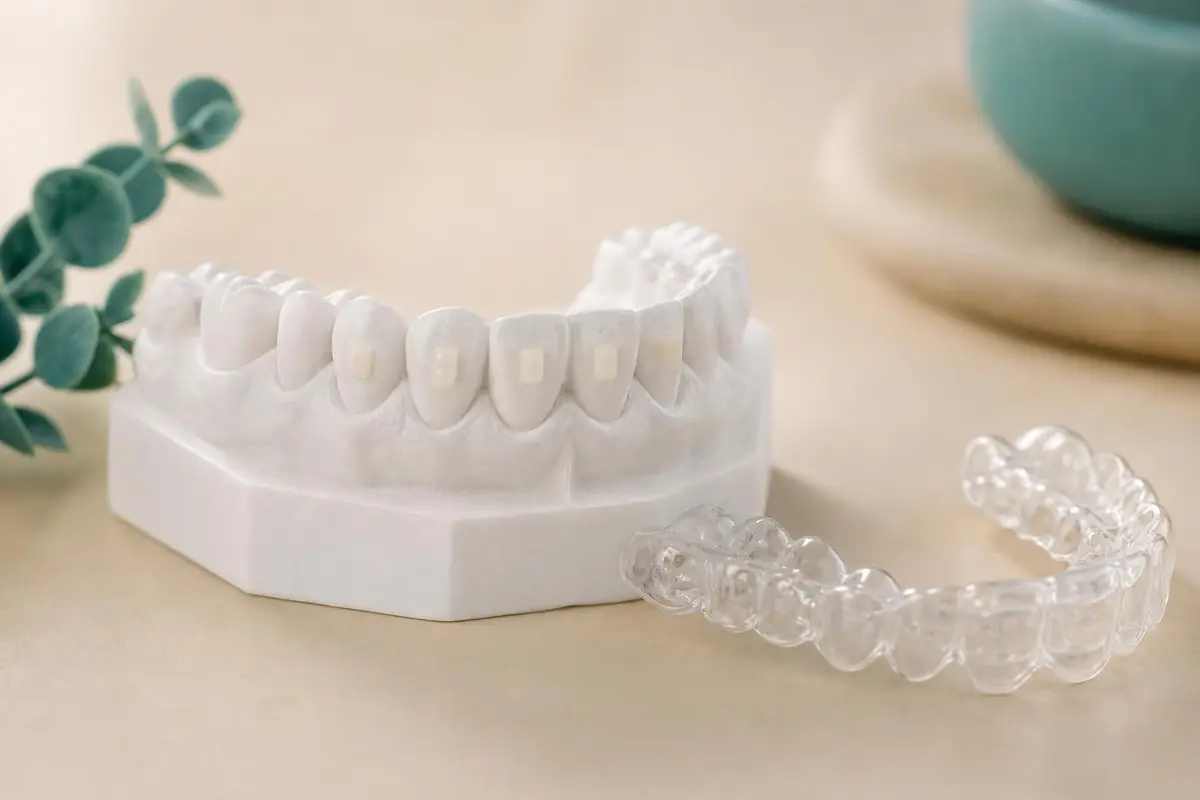
Attachments are small, tooth-colored bumps of bonding material placed on some teeth during Invisalign treatment. They give the aligner something to grip, so it can push, tip, or turn a tooth in ways a smooth tooth surface wouldn't allow. Not every patient needs them, and they're removed when treatment ends. Our Invisalign page explains how treatment works at Pacifica Dental in Huntington Beach.
Key points
- Attachments are made from tooth-colored material and bonded to the tooth surface.
- They act as handles that help aligners grip and guide teeth into place.
- Whether you need them, and how many, depends on which teeth need to move and how.
- Placing them doesn't involve drilling, and it usually doesn't need numbing.
- They're polished off at the end of treatment, before retainers.
What do attachments do?
An aligner moves teeth by pressing on them. On a smooth, rounded tooth, plastic can slip rather than push, especially for movements like rotating a tooth or moving it up or down. Cleveland Clinic explains that small attachments bonded to some teeth give the aligners grip so they can move the teeth. The AAO describes tooth-colored attachments as frequently placed on the teeth to help guide them into place.
Each attachment is shaped and positioned for a specific job. The aligner has a matching pocket that fits over it, so when the aligner presses, the force goes exactly where the plan needs it.
Does everyone need attachments?
No. Some tooth movements are simple enough for the aligner to manage on its own. Others, including many rotations and movements that shift a tooth's position in the bone, are harder for aligners, which is why our Invisalign page notes that attachments are often needed. Your treatment plan shows which teeth will have them before you start.
How are attachments put on?
- The tooth surfaces are cleaned and prepared so the material will bond, much like cosmetic bonding.
- Tooth-colored material is placed using a thin template tray that sets each attachment in the right spot and shape.
- A curing light hardens the material, and any excess is smoothed away.
- You get your first aligners and practice putting them in and taking them out.
The process is quick. There's no drilling, and most people don't need numbing. The AAO notes that attachments are placed as part of the aligner delivery appointment.
Do attachments hurt or feel strange?
They feel like small bumps at first, and your tongue and lips will find them for a few days. Aligners also fit more snugly over attachments, so the first days of each new set can feel tight. Cleveland Clinic notes that pressure or soreness with new aligners usually eases within a few days. If an attachment has a rough or sharp edge that rubs your lip or cheek, call the office and we can smooth it.
Do attachments show?
They're tooth-colored, so they're hard to notice at conversation distance, and the aligner covers them most of the day. Like any bonding material, they can pick up stain. Taking aligners out to eat and drink anything other than water, as the AAO advises, helps keep both the aligners and the attachments clear. Our article on eating and drinking with Invisalign has the practical details.
How do I look after attachments?
- Brush carefully around each attachment, where plaque tends to collect at the edges.
- Brush before putting your aligners back in, so food isn't trapped against the teeth.
- Be gentle with very hard or sticky foods while your aligners are out, since they can knock an attachment loose.
- If an attachment comes off, call us rather than waiting for your next checkup, because a missing attachment can stop a tooth from moving as planned.
For cleaning the aligners themselves, see how to clean Invisalign aligners.
How long do attachments stay on?
For as long as the teeth they help are being moved, which for many patients means most of treatment. Occasionally an attachment is added or replaced partway through if the plan calls for it. Checkups happen roughly every six weeks, and we'll tell you at each one if anything about your attachments is changing.
What happens to attachments at the end?
When the teeth reach their final positions, the attachments are removed and the tooth surfaces are polished smooth. Then retainers take over to hold the result, because teeth tend to drift back without them. Our article on whether you need retainers after Invisalign explains why.
Common questions
Can I get Invisalign without attachments?
Sometimes, if your planned movements are simple. It depends entirely on your teeth, and the treatment plan will show whether any are needed.
Will I have attachments on my front teeth?
Possibly. Attachments go wherever the plan needs grip, and that can include front teeth. They're small and tooth-colored, and with the aligner over them they're designed to be hard to notice.
Do attachments damage enamel?
They're bonded to the enamel surface and removed and polished at the end of treatment. We check the tooth surfaces when they come off.
Do attachments make aligners harder to remove?
A little, because the aligner grips more firmly. We'll show you a technique for removing them, and it gets easier within a few days.
What should I do if an attachment falls off?
Call the office. Keep the aligners clean, and we'll tell you whether to keep wearing your current set until it's replaced.
Thinking about clear aligners? Pacifica Dental offers complimentary Invisalign consultations at our Huntington Beach office. Call (714) 848-8211 or request a consultation, and we'll show you what your treatment plan, attachments included, would look like.
References
This article is general dental health information, not personal medical advice. For recommendations specific to your teeth, schedule an exam.
Ongoing offer
Complimentary Invisalign consultation
Find out whether Invisalign suits your case and what treatment involves — with a clear quote and financing options explained.
- Whether clear aligners fit your case
- What treatment involves, step by step
- A clear quote, with financing options explained
Consultation only — treatment is quoted separately, with costs explained before anything begins.
Ongoing — no expiration.