Dental Care After 60: What Changes and What Helps
After 60, the biggest changes are usually dry mouth from medications, gum disease, decay along the gumline and around older fillings, and dental work that has been in place for decades. Keeping natural teeth healthy comes down to fluoride toothpaste twice a day, daily cleaning between teeth, attention to dry mouth, and a dental visit at least once a year, even when nothing hurts. Pacifica Dental cares for grandparents alongside their children and grandchildren in Huntington Beach as part of family dentistry.
Key points
- Dry mouth is not a normal part of aging, according to NIDCR. It's often a side effect of medicines, and it raises the risk of cavities.
- The CDC reports that about 60% of adults 65 and older had periodontitis (gum disease) in 2009–2014.
- Gum disease and oral cancer often cause no pain early, which is why ADA MouthHealthy advises a dental visit at least once a year.
- An electric toothbrush and easier tools for cleaning between teeth help when arthritis limits grip.
- Dentures need daily cleaning with denture products and time out of the mouth every day.
What changes in the mouth after 60?
Teeth don't wear out on a schedule, but the conditions around them change. More people take medications that reduce saliva. Gums may have receded over the years, exposing root surfaces that are softer than enamel and more prone to decay. Fillings, crowns, and bridges placed decades ago reach the end of their working lives. And conditions like arthritis can make thorough brushing physically harder.
The stakes are real. The CDC reports that 1 in 6 adults age 65 or older had lost all of their teeth in 2011–2016. Decay and gum disease are the two main threats to keeping natural teeth, which is why prevention still pays off at every age.
Why is dry mouth such a big deal?
Saliva rinses away food, neutralizes acid, and helps repair early enamel damage. Without enough of it, cavities form faster. NIDCR is clear that dry mouth is not a normal part of aging. Common causes include hundreds of medicines, among them some for high blood pressure, depression, and bladder control, as well as conditions such as diabetes and Sjögren's disease, and cancer treatments.
NIDCR suggests these steps for relief:
- Sip water through the day
- Chew sugarless gum or suck sugarless hard candy to stimulate saliva
- Limit caffeine, and avoid tobacco and alcohol
- Use a humidifier at night
- Ask your doctor whether a medicine could be adjusted, or about a saliva substitute
Never stop or change a prescription on your own. Tell your dentist and your doctor about the dry mouth, and let them work out the cause together.
How common is gum disease in older adults?
Very. The CDC reports that about 60% of adults 65 and older had periodontitis in 2009–2014. Risk factors include smoking, diabetes, medications with oral side effects, and poor oral hygiene. Because early gum disease often doesn't hurt, ADA MouthHealthy advises not waiting for pain before seeing a dentist. Bleeding when you brush is a common early sign, and our bleeding gums guide explains what it can mean.
How can brushing be easier with arthritis or limited grip?
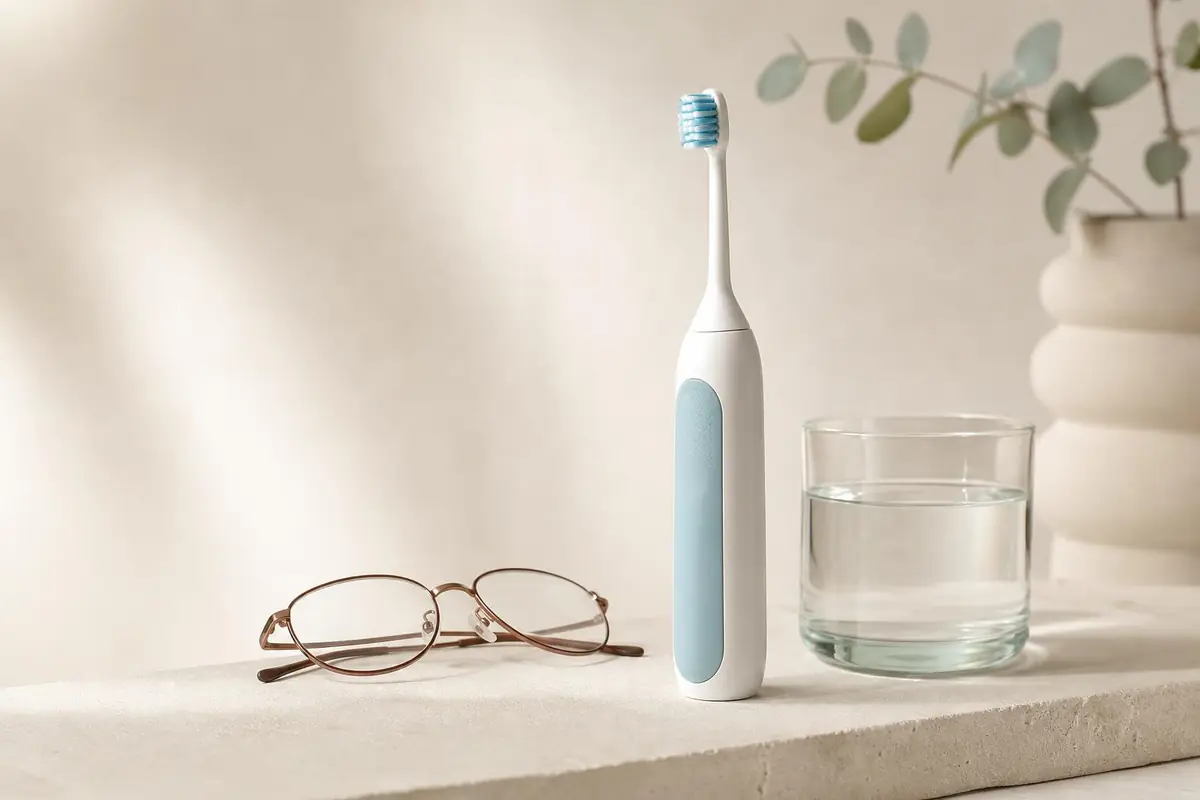
- Try an electric toothbrush, which ADA MouthHealthy suggests when arthritis or another condition limits movement.
- Use a soft-bristled brush with a small head, and fluoride toothpaste, twice a day.
- Clean between teeth daily with whatever you can manage: floss, pre-threaded flossers, tiny interdental brushes, a water flosser, or wooden plaque removers.
- Ask your hygienist to watch you brush once. A small change in angle or tool often makes more difference than brushing harder.
Our article on electric vs. manual toothbrushes covers where a powered brush genuinely helps.
What about dentures and older dental work?
If you wear dentures, ADA MouthHealthy recommends cleaning them daily with cleaners made for dentures, not regular toothpaste or household cleaners, which are too abrasive. It also recommends taking dentures out for at least four hours every 24 hours, ideally overnight. Dentures that start to feel loose or sore are worth having checked, because the mouth changes shape over time.
Older fillings, crowns, and bridges are checked at every exam. Their edges are where new decay often starts, especially when the mouth is dry. Catching a small problem at a restoration's edge is usually simpler than replacing the whole thing later.
How often should older adults see a dentist?
At least once a year, according to ADA MouthHealthy, and the CDC recommends a checkup at least once a year or more often if your provider suggests it. People with gum disease or dry mouth often benefit from more frequent cleanings. Pacifica Dental is open six days a week, including Saturdays, accepts Medi-Cal Dental (we verify coverage before the visit, since it depends on eligibility), and offers an in-house membership plan with three cleanings a year for patients without insurance.
Helping an aging parent with dental care
If you help care for a parent, a few things make a big difference: bring an up-to-date list of medications to each visit, bring insurance or Medi-Cal cards, and mention any changes you've noticed in eating, denture fit, or brushing. If memory or mobility makes daily care hard, it's reasonable for a family member to help with brushing. As a family practice, we can often schedule a parent's visit alongside your own.
Common questions
Can medications cause cavities?
Indirectly, yes. Many medications cause dry mouth, and ADA MouthHealthy notes that dry mouth raises cavity risk. Tell us what you take, so we can plan prevention around it.
Do I still need dental X-rays at my age?
Often, yes, because decay around old fillings and bone loss from gum disease don't show on a visual exam. The schedule is based on your risk. Our article on dental X-ray safety explains how often is appropriate.
Is fluoride still useful for adults?
Yes. Fluoride toothpaste helps protect enamel and exposed root surfaces at any age, and your dentist may suggest extra fluoride if you have dry mouth or frequent decay.
What should I bring to my visit?
A list of your medications, your insurance or Medi-Cal card, and any questions about dentures, dry mouth, or older dental work.
Pacifica Dental is a family practice on Main Street in Huntington Beach, led by Dr. Sameer Aljanedi, caring for patients of every age, including many families who come from nearby Seal Beach and Westminster. Call (714) 848-8211 or request an appointment to schedule a checkup.
References
This article is general dental health information, not personal medical advice. For recommendations specific to your teeth, schedule an exam.